Date
13 October 2026
By
Bouygues Construction's Press Department
Category
Press release
As part of a joint venture, Bouygues Construction builds a drainage tunnel to increase Hong Kong’s resilience to flooding
Bouygues Construction, through its subsidiary Bouygues Travaux Publics, is collaborating with China Road and Bridge Corporation (CRBC) to build the Hong Kong East Drainage Tunnel (HKEDT). The contract, worth a total of €173 million¹, was awarded by the Drainage Services Department (DSD) of the Hong Kong Special Administrative Region Government.
Boosting Hong Kong’s climate resilience
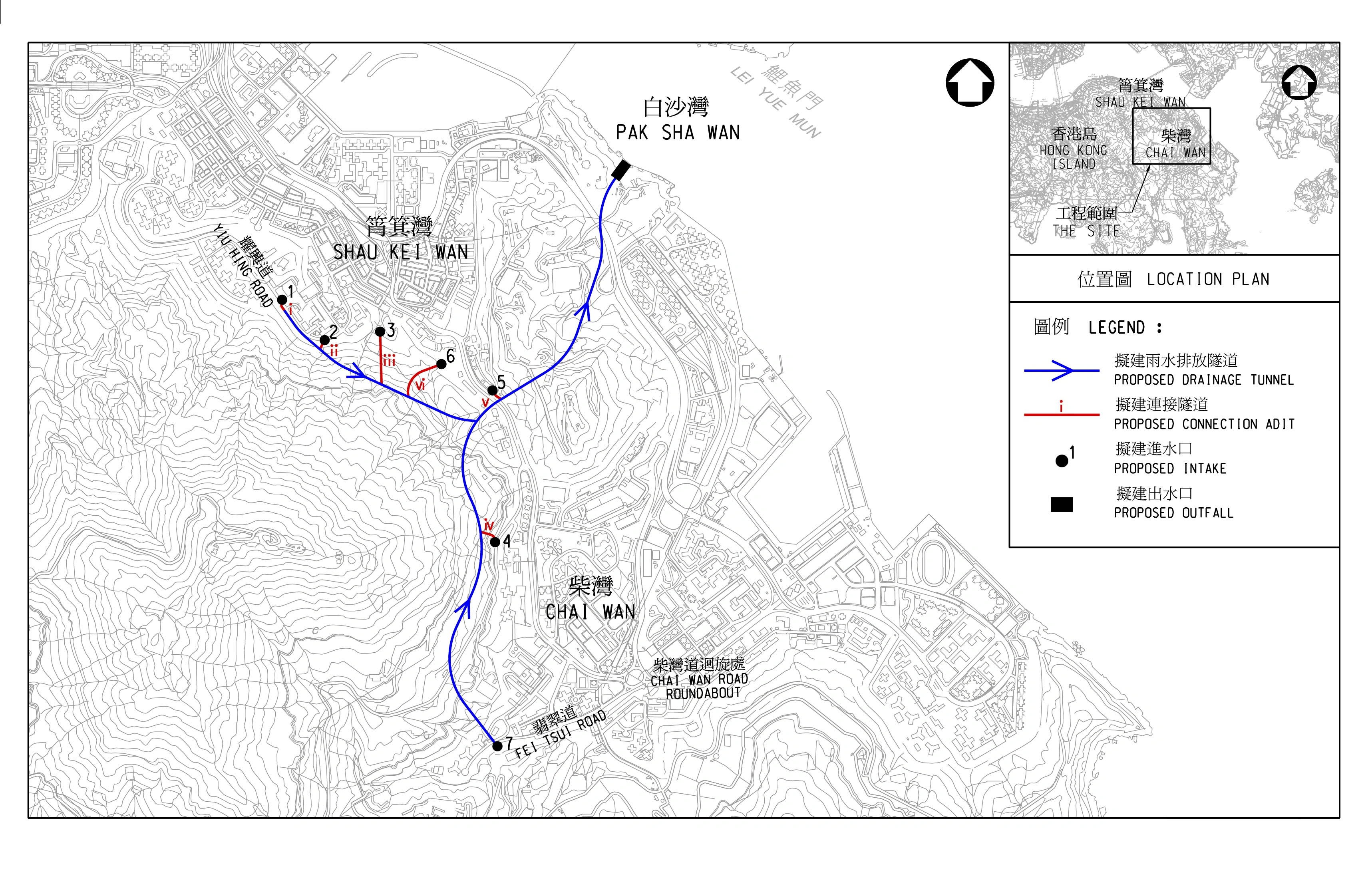
This project was designed as part of the government’s policy to improve Hong Kong’s flood prevention infrastructure and strengthen the city’s resilience to extreme weather events. Once completed, the tunnel will collect rainwater from upstream catchment areas and channel it to Pak Sha Wan, a nearby discharge point into the sea. This will relieve pressure on the existing downstream drainage network and reduce the risk of flooding in the Eastern District of the island, where impermeable surfaces and high urban density are significantly worsening the risk of flooding.
Bertrand Burtschell, Deputy CEO of Bouygues Construction with responsibility for Civil Works, said: “Some twenty years after we handed over the Hong Kong West Drainage Tunnel, this project is testament to our continued presence in this region and the trust that has been placed in our expertise to construct complex and essential infrastructure. Alongside our partners, we are continuing our commitment to strengthening the resilience of this region and providing its residents with better protection against extreme weather events.”
Cutting-edge underground engineering
The project includes the construction of a 3.6-kilometre drainage tunnel, approximately 5 metres in diameter, which will link the districts of Shau Kei Wan and Chai Wan, on the east coast of Hong Kong Island, to Pak Sha Wan. The consortium will also build seven intake structures to collect and capture surface runoff before it reaches built-up areas, six connection adits and an outfall structure which discharges water from the tunnel into the sea. The construction of the tunnel will combine several techniques, including excavation using a tunnel boring machine (TBM), drill-and-blast excavation, the drill-and-break method for excavating rock and large concrete structures, and pipe jacking. This combination of techniques reflects the complexity of the project, which is scheduled for completion in 2030.
Established expertise in underground works
With more than 40 years of experience of designing and building tunnels on every continent, Bouygues Construction has expertise in all tunnelling techniques, from TBMs to traditional methods. These techniques are adapted to each geological and environmental context. The company’s expertise has been demonstrated in landmark projects such as the Channel Tunnel and the Tuen Mun–Chek Lap Kok Tunnel in Hong Kong, which was excavated using a TBM with a 17.63-metre diameter, a world record in its category at the time. More recently, in the United States, the Pawtucket tunnels in Rhode Island and the Potomac River Tunnel in Washington D.C. also reflect the application of this expertise in the context of urban resilience: they both help to limit drainage system overflows during heavy rainfall and improve the quality of marine environments.
*********
¹ Bouygues Construction’s share is €94 million at the August 2026 HKD/EUR reference exchange rate (order intake in Q3 2026).
Recommended Reading
Explore our latest events, news, and sustainability initiatives below.
Bouygues Construction inaugurates Scale One, a full-scale innovation platform for the construction sector
Bouygues Construction continues the modernisation of Yopougon University Hospital, one of Ivory Coast's largest medical facilities
Appointment of Clotilde Solier as Chief Financial Officer of Bouygues Construction